

In my book, “Me Time Monday,” I explain how the 7 Wellness Elements of life bring balance and joy. One of the key 7 elements is financial wellness.
Key Statistics on the Sandwich Generation and Financial Wellness
For family caregivers (which I call Gen C: Generation Caregiver), and especially those in the sandwich generation managing costs of care for children and parents or grandparents, financial resiliency is increasingly challenging. Here are key takeaways on what caregivers are facing:
- The Sandwich Generation survey by Care.com found that 82% of the Sandwich Generation are financially strained by costs of care for themselves and two other generations1
- Increasing costs of care, especially long-term care. Families can spend on average $360,000 over an average 3-year period for 24/7 care whether delivered in the home or in assisted living or memory care. None of these costs are covered by Medicare.2
- Older adults are realizing their wealthspan does not match their lifespan which is part of what I call the “longevity gap.” One study found one-third of boomers did not have the potential savings needed for long-term care with a median savings of $200,000.3 Yet, the average retiree will need savings of at least $1.18 million to support a 30-year retirement (this calculation is based upon average returns of 6% and inflation at 2.5%).4
- An AARP survey found 78% of caregivers are financial contributors digging into their own pockets and savings to cover some or most of the costs of care. These caregivers are spending on average 26% of their annual income after costs that are covered by the loved one’s Medicare benefits, Social Security, supplemental health plans, long term care insurance and personal savings.5
Following are articles, white papers, podcasts and webinars that help the Sandwich Generation better prepare to care, especially when it comes to financial planning.
“Preparing and planning for care of older loved ones will keep most sandwich generation caregivers out of poverty – it’s never too early or too late to start those long-term-care plans. Working with a credentialed financial gerontologist will ensure you get the expert advise you need to navigate your way with
–Sherri Snelling, corporate gerontologist
financial resiliency.”
My Financial Gerontology Columns and the Late Great Neal Cutler
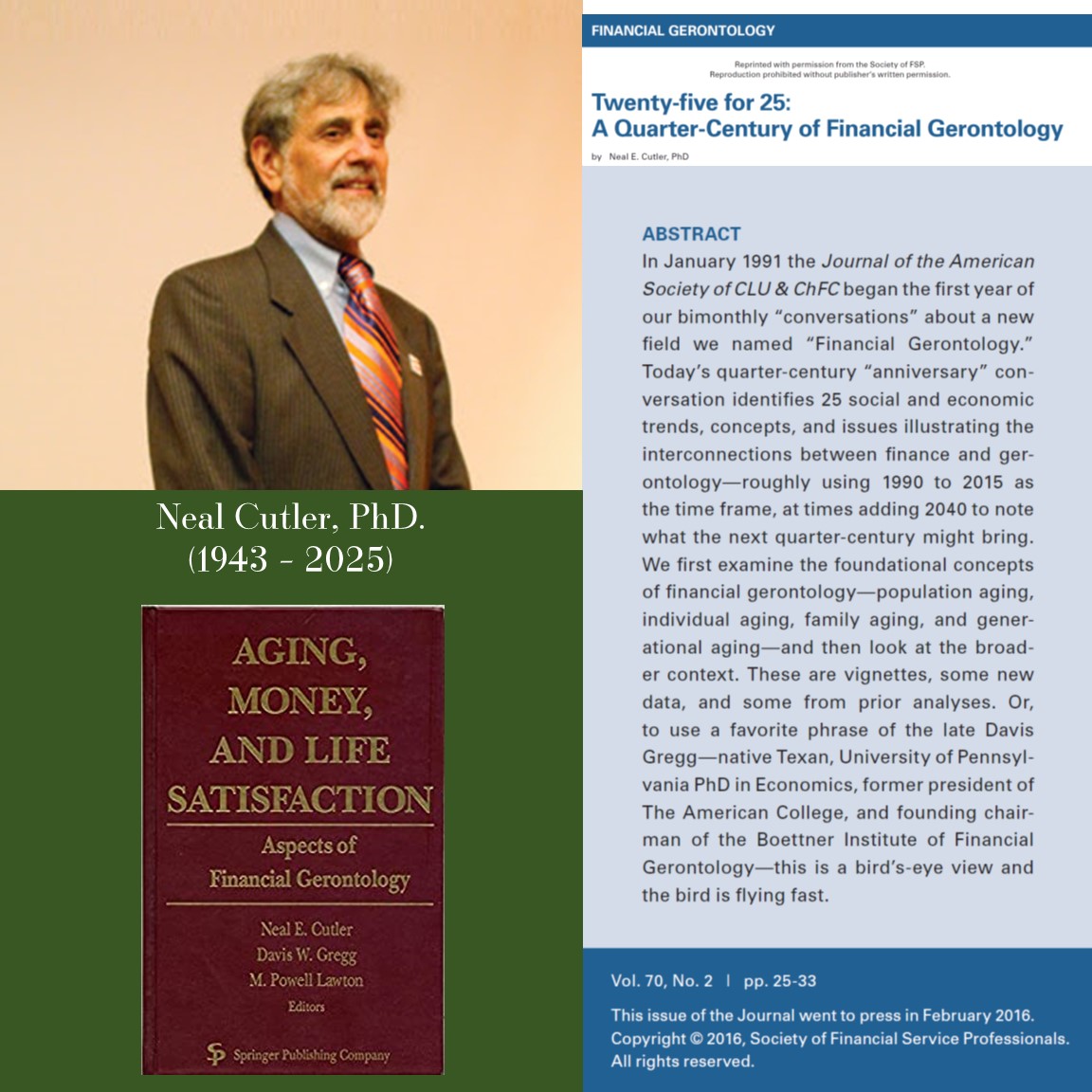
In late 2024, a mentor and friend, Neal Cutler along with his colleague John Migliaccio, asked me to join their team of writers for an ongoing financial gerontology column for the Journal of Financial Service Professionals. Neal had been my professor at USC as an undergrad studying political science and journalism. Later in life we reconnected working together on a project for the Motion Picture & Television Fund.
Getting this call from Neal was timely – he had read I had recently received my masters in gerontology from USC and always admired my writing. I had the honor of working with him until sadly he passed in late 2025. RIP Neal.

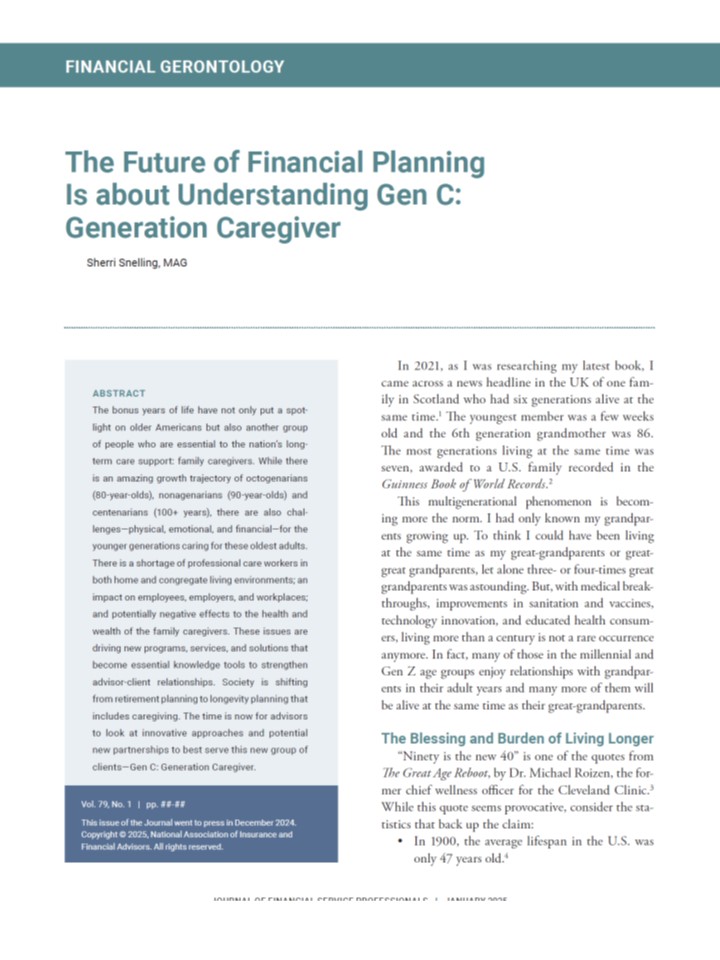
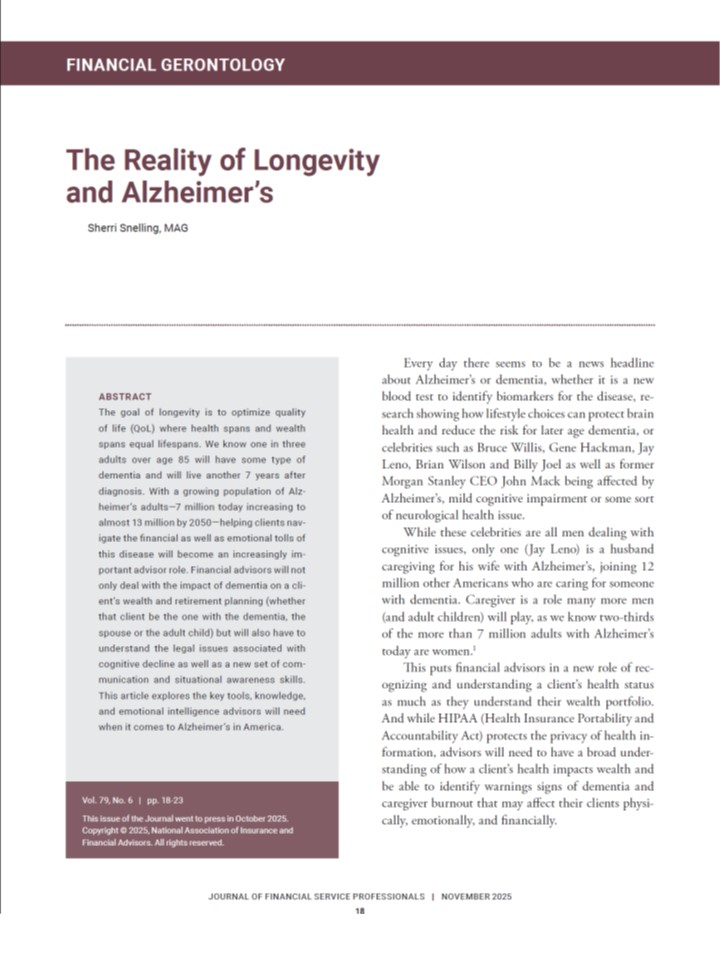
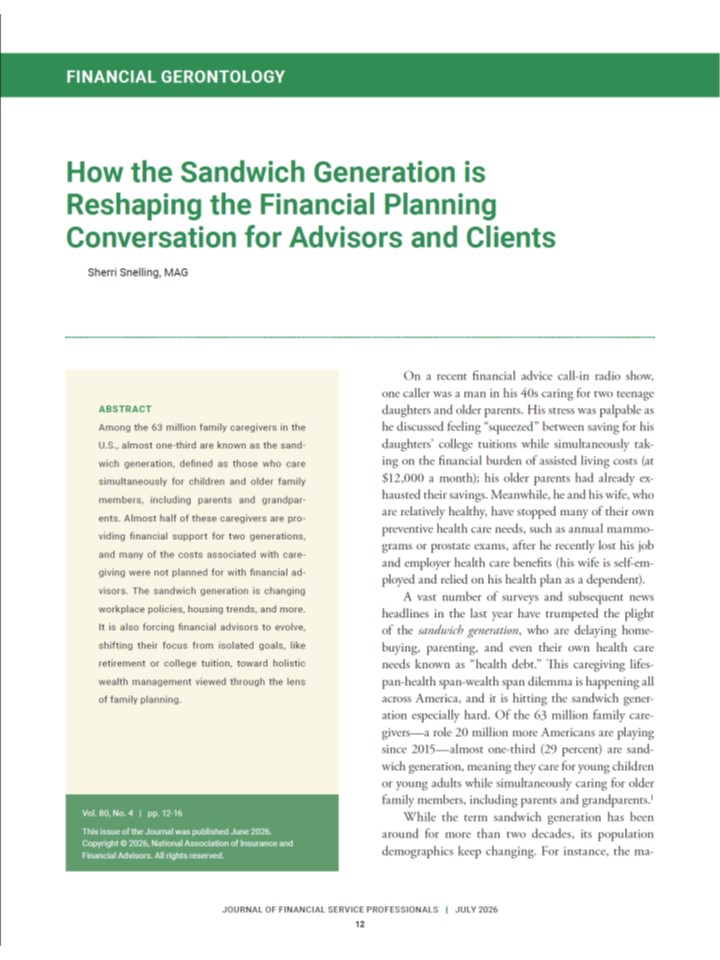
My columns for the Journal to date cover: Gen C: Generation Caregiver and the Future of Financial Planning; The Financial Realities of Longevity and Alzheimer’s and How the Sandwich Generation is Reshaping Financial Planning when it comes to home buying and starting a family.
Below are pdfs of the financial gerontology articles I have written for the journal (only members can access online).
Click here to learn about Sherri’s other financial gerontology activities
Additional Content on Financial Gerontology and Financial Wellness for Caregivers
Me Time Monday Self-Care in 7 Minutes
Below you will find more content from Sherri including a Me Time Monday Self-Care in 7 Minutes video on how to build your personal Joyconomy from her book and podcast interviews with experts who help caregivers find financial resiliency.

Caregiving Club On Air Podcasts – Financial Wellness Episodes
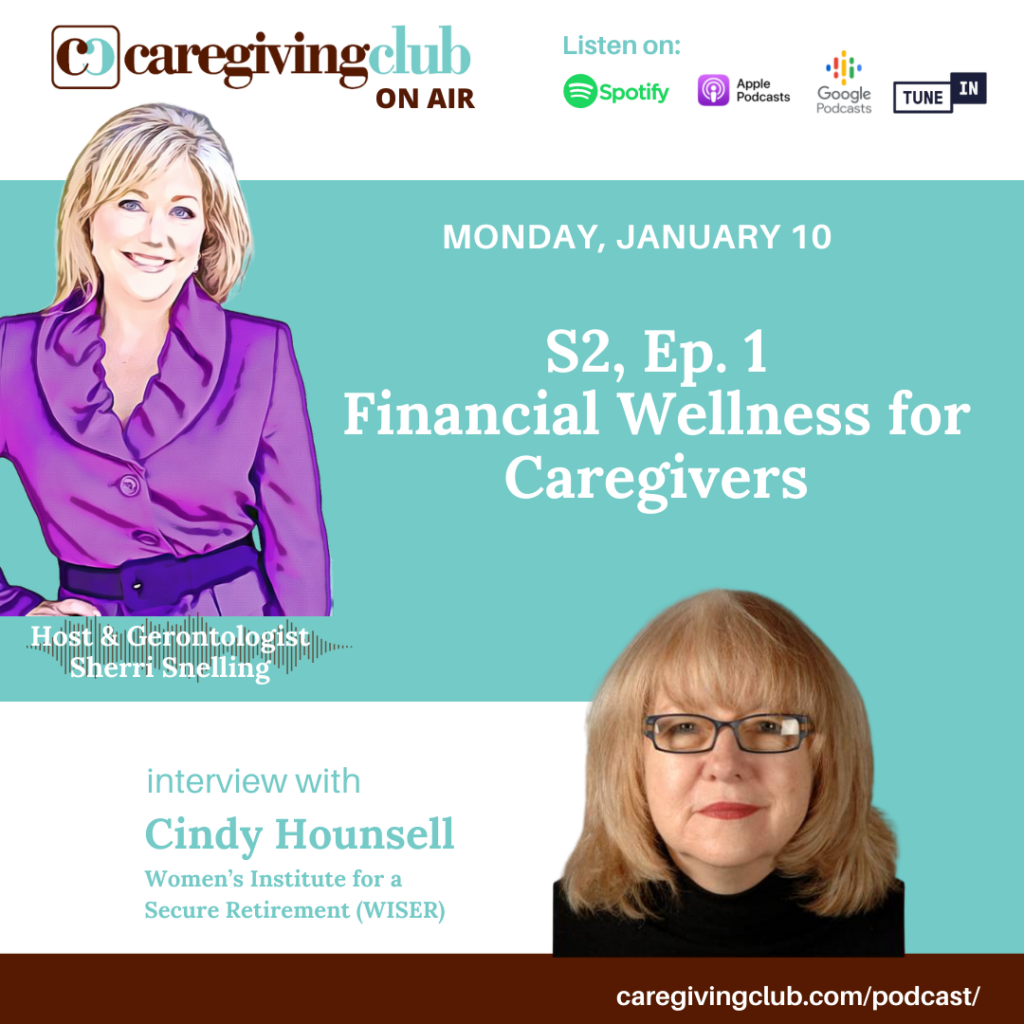
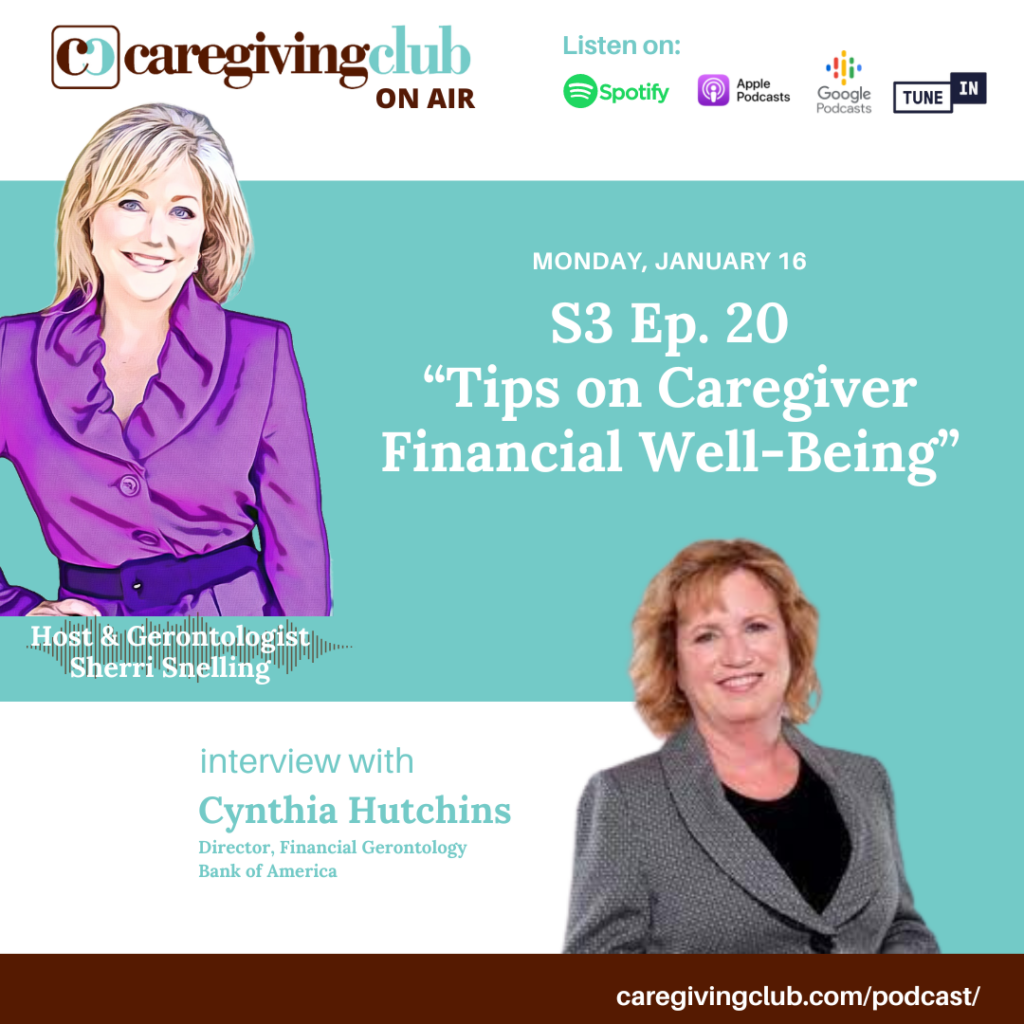
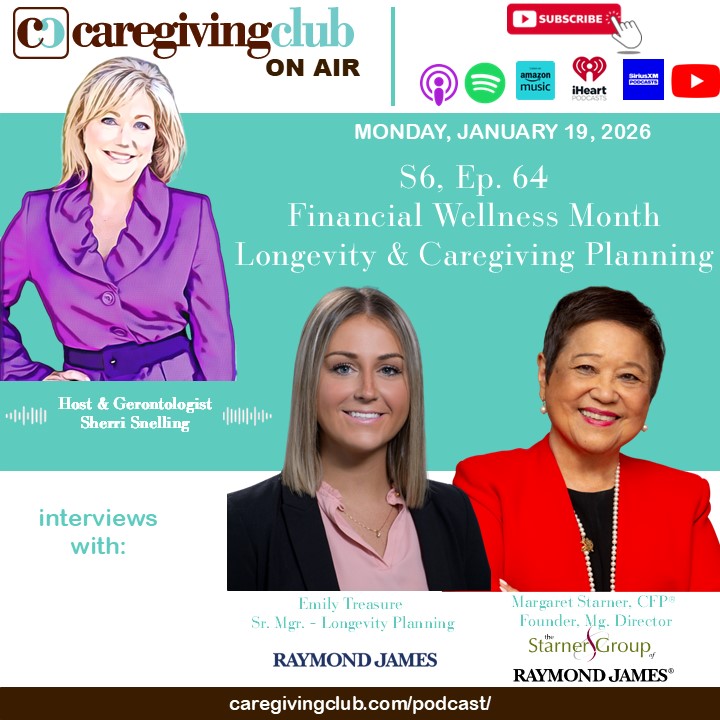
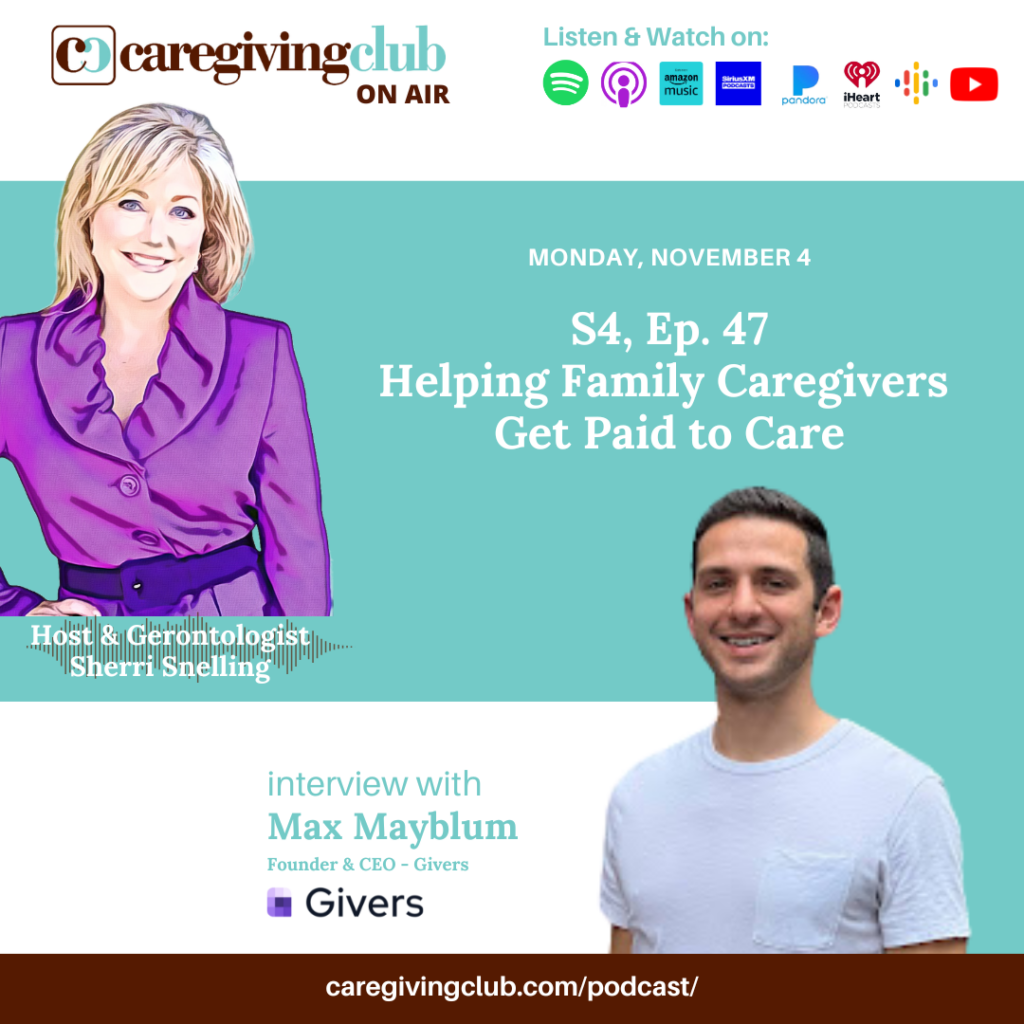
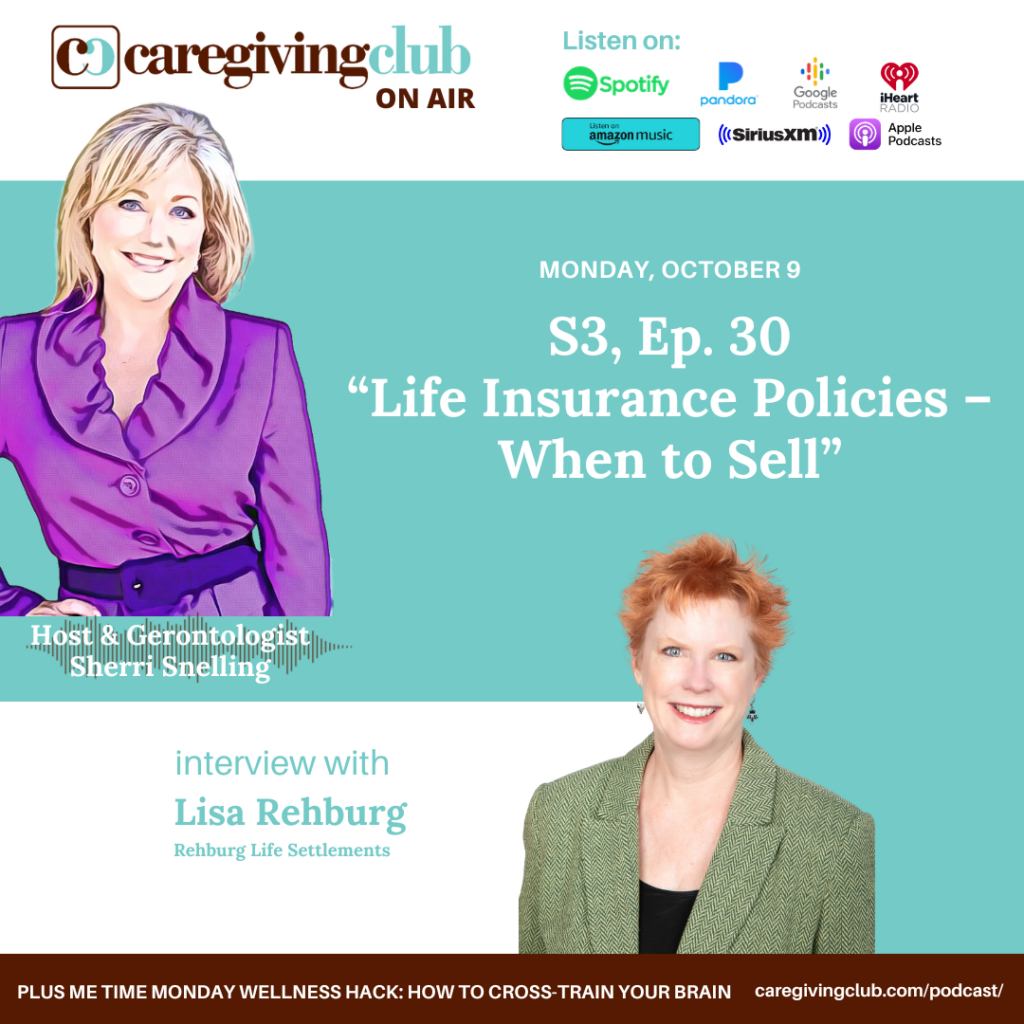
You can also check out our “Caregiving Club On Air” podcast interviews (found on Spotify, Apple Podcasts, Amazon Podcasts, Caregiving Club on YouTube and other channels) with financial experts who understand the needs and are creating tools and programs for family caregivers:

White Papers, Podcasts for Financial Advisors
Read the White Papers on Financial Gerontology created by Sherri for Wells Fargo’s First Clearing Financial Advisor Group. You can also listen to the Wells Fargo podcasts on these topics: (program to train wealth advisors)
Wells Fargo First Clearing Financial Gerontology Project
FAQs
Q: What is financial gerontology?
A: Financial gerontology is a multidisciplinary field of study and practice encompassing both academic and professional education, that integrates research on lifespan aging and human development with the concerns of finance and business.
Financial gerontology draws upon four kinds of aging or “‘four lenses” through which aging and finance can be viewed: population aging, individual aging, family aging, and generational aging. The foundation for gerontology is the BioPsychoSocial model of biology, psychology and sociology. Financial gerontologists use this base to review lifespan, healthspan and wealthspan for clients.
Q: How do you become a financial gerontologist?
A: While not yet a formal undergraduate or post-graduate degree, there are several universities and some private companies that offer online certification training in financial gerontology. The type of credential you receive depends on the organization or academic institution providing the certificate. Typically, academic institutions with a gerontology undergraduate and post-graduate programs rank at the top of these certifications (example: USC Leonard Davis School of Gerontology).
While the industry is still emerging, many financial advisors along with attorneys, health care insurance executives, accountants and others who guide and advise consumers on lifespan and longevity planning are seeking this next level training.
Also, many companies are now hiring Chief Gerontology Officers and Chief Longevity Officers who should have training in both generation gerontology as well as financial gerontology. A good example is Bank of America has partnered with the USC Gerontology school on a certificate offered to all Bank of America employees.
Q: Should consumers, and especially family caregivers, work with a financial gerontologist on retirement and other long-term care planning?
A: Families face a complex, fragmented system when it comes to long-term care, health care and end-of-life planning. Working with a financial advisor who has taken the steps to become an expert in longevity and gerontology as a financial gerontologist and not just a financial services product salesperson is advised and may save families thousands of dollars in the choices they make.
References
1 Brown, M. (July 21, 2026) Sandwich generation caregiver report: What it looks like to navigate
the mental overload of caring for kids and aging parents. The Sandwich Generation Survey by Care.com., Boston, MA. Retrieved: https://www.care.com/c/sandwich-generation-caregiver-report/
2 CareScout and Genworth (2026). Cost of Care Survey. CareScout and Genworth. Retrieved:
3 Carstensen, L., et al., (2018). The sightlines special report: Seeing our way to financial
security in the age of increased longevity, Stanford Center on Longevity, Palo Alto, CA.
4 C. O’Hara (January 27, 2015). How much money do I need to retire? AARP Magazine,
Washington, D.C.
5 Skufca, L. & Rainville, C. (June, 2021). Caregiving out-of-pocket costs study AARP,
Washington, D.C.
©2026 Sherri Snelling



0 Comments