

You realize once an official day has been named for you, you have made it into the big time. For centenarians — people who have reached their 100th birthday — that day is September 22 National Centenarian Day. Longevity is helping drive attention of this “oldest old” sector of our population and the demographic numbers really tell the tale on how we are living longer.
Key Takeaways
- Statistics on centenarians today and growth projections
- New study on why children of centenarians have a better chance of living longer
- Three key things to do to increase your chance of living a quality life to age 100
- Stories of thriving centenarians and a survey on their secrets to living the good life
- News and podcasts on longevity and quality of life
- Resources and calculators to assess your chances of living to 100
The recognized leader in centenarian research and information is the New England Centenarian Study along with surveys conducted by Pew Research on 100-year-olds and beyond. Here are their recent findings:
- There are 101,000 Americans who are currently age 100 – about 1 in every 5,000 – a significant increase since the 1950s when centenarians totaled 2,300 people 1,2
- By 2054, projections are for the centenarian population to quadruple to 422,000 3
- Among 60-year-old women who do not smoke, 50% will live to 90; 33% will live to 95 and 14% will reach 100 4
- Today’s 15-year-olds have a 50% chance of living to 104 5
When it comes to places, California has the highest number of centenarians (more than 10,000) because they have a higher popuation number, but per capita Hawaii is No. 1 for centenarians with 4.4 of every 10,000 residents at 100 years old.
When it comes to the Blue Zones, Loma Linda, Calif. is the only “official blue zone” in the U.S. recognied globally although 70 citites are certified active blue zones. Originally identified by Dan Buettner, blue zones are based on criteria including physical, emotional, social and spiritual health (his Netflix series on living to 100 is a must-see).

New study shows children of centenarians have longevity benefits
Researchers at Albert Einstein College of Medicine, Boston University, and Tufts Medical Center recently found that people with at least one parent who made it to age 100 have a lower risk of cardiovascular disease and other real, measurable health benefits:
- 42% lower risk of death at any given age
- 33% lower cardiovascular risk
- 32% lower hypertension risk
Diseases showed up later too: hypertension arrived about five years later on average. Even after adjusting for smoking, diet, exercise, income, education, the health benefits of long-lived parents were still significant.
News for National Centenarian Day
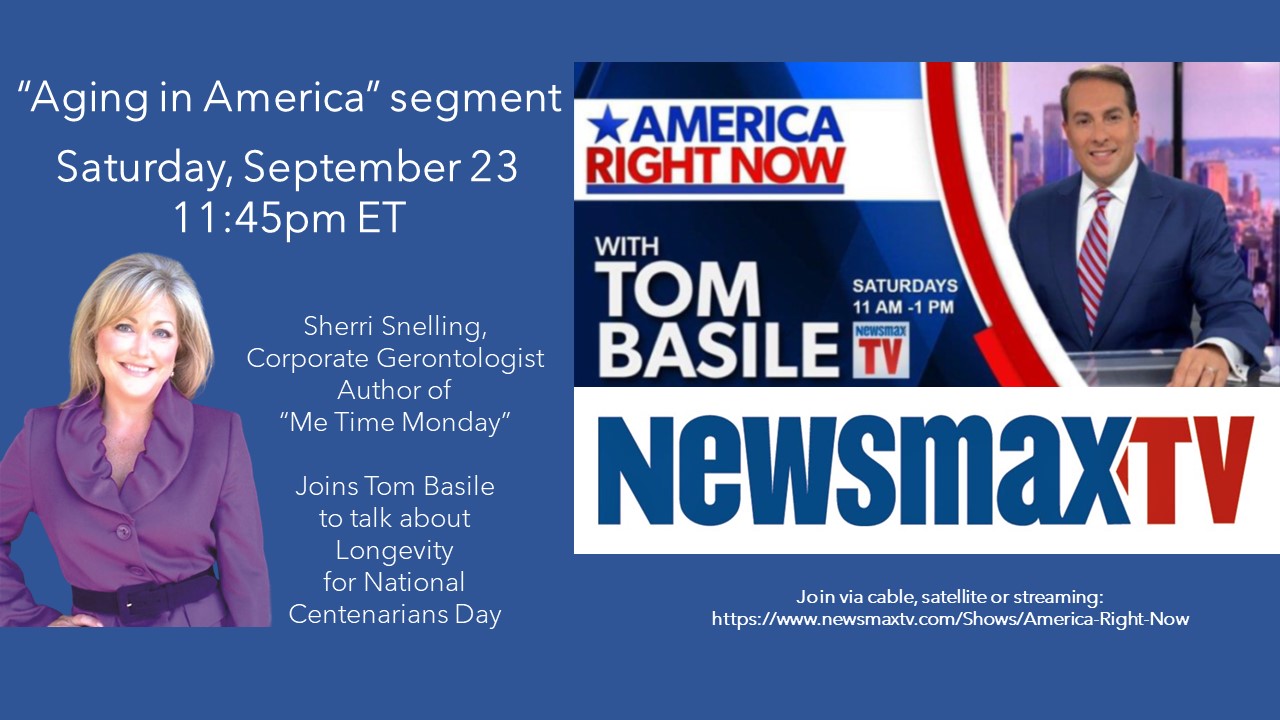
To commemorate National Centenarian Day on September 22, 2023 I was interviewed by Tom Basile at Newsmax TV about my new book, Me Time Monday, and the secrets to living longer.
While reaching age 100 can be contributed to a combination of factors including: genetics, environmental factors (e.g., lower air pollution neighborhood and community), being active, eating nutritiously, getting restful sleep, some of the other keys to longevity based on the research for my book include:
- Relationships are #1.
If you want to live longer, invest in your social wellness. Have at least one confidante who has your back, but also have a select group of quality relationships that support you – the IRL (in real life) friends not the URL virtual friends on social media. You also should seek intergenerational experiences (grandkids+grandparents) that keep you engaged in the world and youthful exuberance.
- Live a balanced life of meaning and joy.
This is straight from my book defining a balanced life as practicing small wellness activities in these 7 areas of life:
Physical – move every day and eat a Rainbow or Mediterranean/MIND diet, get good sleep
Emotional – do not sweat the small stuff – do not hold onto stress and anxiety; instead learn how to be resilient and optimistic (optimists live longer)
Social – stay socially engaged and have quality relationships you can rely on (see #1)
Intellectual – be curious and practice lifelong learning and engage in exercises for your brain (not brain games which do nothing but actually working different areas of the brain and using multisensory exercises)
Environmental – embrace NeuroDesign which is good for brain health such as ensuring you bring nature (biophilic design) into your home and office (plants matter and boost air care, your mood!)
Financial – live comfortably but do not let the pursuit of wealth be your only goal in life. And, remember to give back
Spiritual – be grateful, experience awe and believe in a higher power
- Invest in your personal Joyconomy.
In my book I talk about how we do not have much control over the U.S. economy, higher inflation and interest rates, rising gas and grocery prices – all of which challenge your financial wellness and can lead to a downward turn in your emotional wellness. However, we do have control over our personal happiness and joy. Finding ways to find joy is what Joyconomy is all about. Centenarians have already learned this – the U Curve of Happiness research shows throughout life we are happiest as we hit our 70s and 80s and happiness continues to climb from there. We are least happy in our late 40s to mid 50s – but hang on because it gets better with age!
I also talked to longevity expert, Marc Schulz, Co-Director of the Harvard Adult Development Study that has studied why some people live longer, happier and healtheir. Watch that interview for the “Caregiving Club On Air” podcast here:
The 100@100 Survey
While my book uncovers comprehensive research into wellness and longevity, I also had experience specifically researching centenarians and their secrets to living longer. Back in 2005-2009 I led a research project at a large health insurance company called the 100@100 Survey where we interviewed and surveyed 100 Americans over age 100 (a precursor to Dan Buettner’s “Blue Zones” book on global pockets of centenarians). The results were insightful and still relevant even 20 years later:
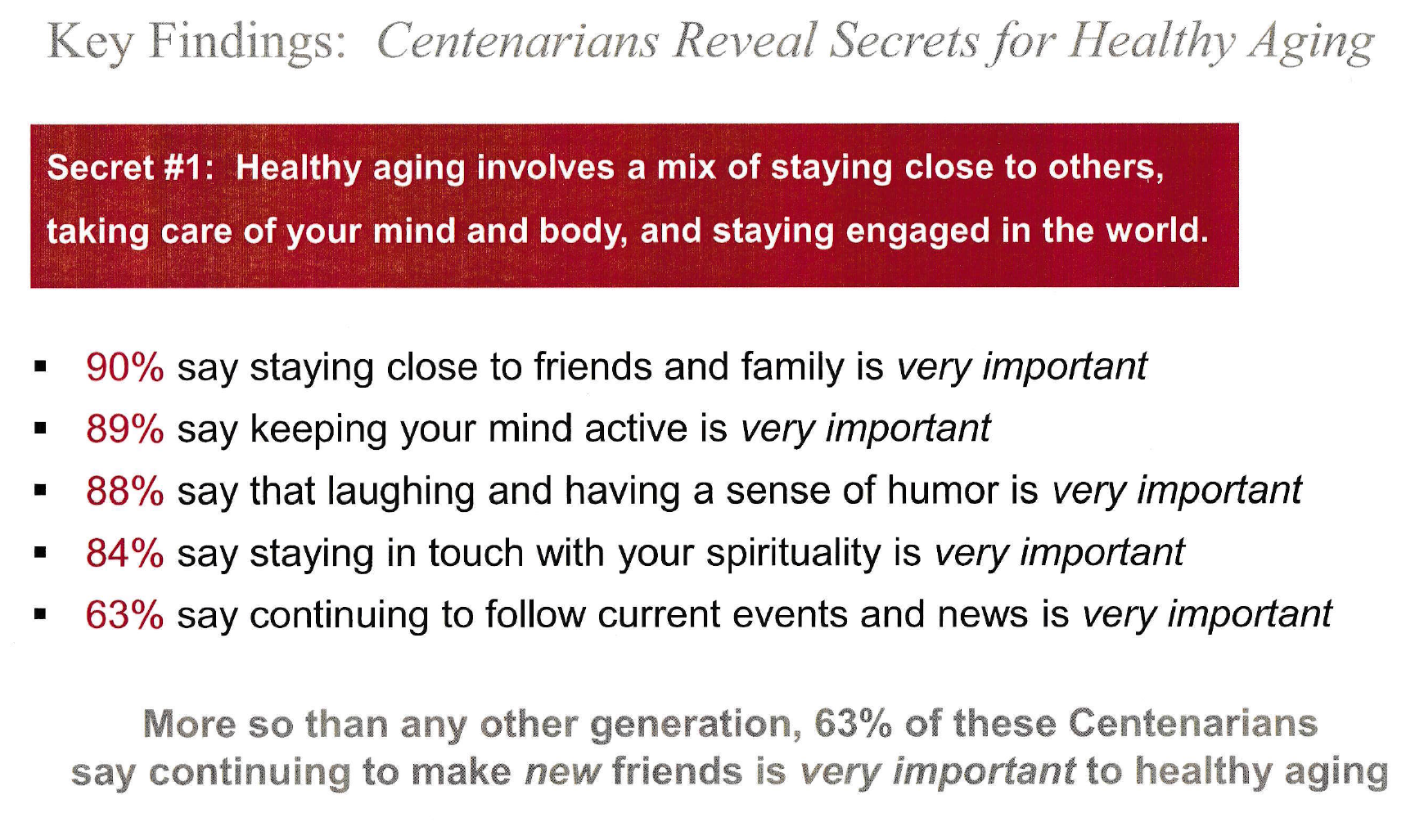
© UnitedHealthcare – Chart from 100@100 2008 Survey
Part of my work on the 100@100 Survey was to oversee the telephonic survey but also travel around the U.S. interviewing centenarians on their lives. Here are some highlights:
I spoke to one woman who was 104 and told me she’d been married eight times, “Elizabeth Taylor has nothing on me,” she told me. She married her current husband when she was 97 and he was a mere 83. I asked her if she had heard of the term “cougar” for women who marry younger men and she said, “Well, I’m Queen Cougar then because my last five husbands have all been younger.”
A gentleman who was 101 still played in a local jazz bar as a guest saxophonist on Thursday nights. He told me he was living proof a daily scotch won’t kill you.


Another woman, age 102, tended her rose garden every day and still drove. She proudly told me she was born before there were cars everywhere and in her entire lifetime she had never had an accident or a ticket.
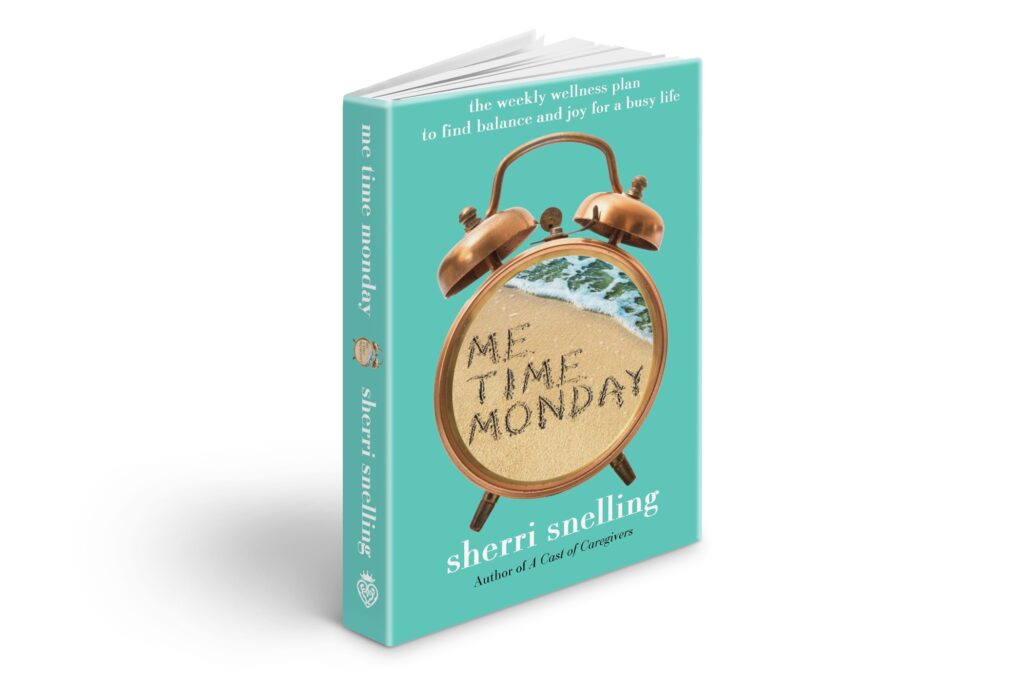
Learn more about longevity and the lifelong journey to wellness and joy in my new book, “Me Time Monday – The Weekly Wellness Plan to Find Balance and Joy for a Busy Life.”
Living to 100 Online Calculators
FAQs
Q: What is the difference between a super ager and a centenarian and super centenarian?
A: A super ager is a person who lives beyond age 80 with better physical health than other 80+ year olds but more importantly
has the cognitive health and mental sharpness of a person 20-30 years younger.
A centenarian is a person who has lived to age 100 regardless of physical or cognitive health issues
A super-centenarian is a person who has live to age 110 or beyond – the oldest of the old in our population and a number that is increasing but still rare with only 300 to 500 living super-centenarians worldwide.
Q: What is living to age 100 based on – it is more genetics or lifestyle choices?
A: Centenarians have benefitted from the last 100 years of medical and scientific advancements including drug therapies and vaccines; from better sanitation than in the 20th century; from more education longer than in past decades and in healthy aging and prevention education.
Certainly genetics play a role too but according to the Harvard Adult Development Study conducted consistently since 1938, the #1 reason people live longer, healthier and happier is based on their social health – if they have a confidante in life and a strong social circle and habit of engaging regularly in social activities. Bottom line: human thrive in their tribe.
Watch my podcast interview with Marc Schulz above
Q: Does where I live play a role in how long I might live?
A: Recent research shows environmental factors play a key role in our longevity and especially brain health. For instance, recent studies have found noticeable gaps of up to 7 to 10 years between the highest-ranking states for longevity (e.g., Hawaii and California) and the lowest-ranking (e.g., Mississippi and West Virginia). A variety of issues play into these factors including air pollution, noise pollution (living near busy highways), rural health care gaps, physical movement opportunities, etc.
REFERENCES
1 United States Census Bureau (September 22, 2026) US Census Bureau “Older population and
aging.” Washington, DC. Retrieved: https://www.censuus.gov/topics/population/older-aging.html
2 Schaeffer, K. (January 9, 2024) “U.S. centenarian population is projected to quadruple over the
next 30 years” Pew Research Center, Washington, DC.
3 ibid.
4 Stanford Center on Longevity (2014) “Life planning in the age of longevity: Insights for
boomers” Stanford University, Palo Alto, Calif.
5 Shen, L. (October 14, 2021) Today’s youth have a 50% chance of living to 104 What does that
mean for the economy? Fortune, New York, New York.
©2026 Sherri Snelling



0 Comments